
 Get free legal advice from a solicitor

One of the most common fears held by many is losing their sight. While it is rare for sight loss to occur following an accident at work, it can happen. A loss of sight claim may be possible for those suffering from permanent blindness through to blurred vision after a workplace accident caused by employer negligence.
In this guide, you’ll read how to claim compensation for sight loss at work, how much compensation could be awarded, and how the claims process works in general.
We are here to help if you’ve suffered from vision loss. Our team is specially trained to review your case on a no-obligation basis and to clearly explain your options. If you have a strong enough case, you could be partnered with a No Win, No Fee accident-at-work solicitor, if you want to proceed.
For more information about how we can help, you can:
- Call our legal advisors on 0333 241 2519.
- Connect to our live chat service right now.
There’s more free advice on work-related sight-loss claims throughout this guide. If you want to discuss your case at any point, please feel free to get in touch.
Types of Sight Loss Injury at Work We Can Help With
Some examples of injuries that could result in a work-related sight loss claim we can help with include:
- Complete blindness.
- Partial blindness.
- Temporary blindness.
- Minor eye injuries.
- Blurred vision (temporary or permanent).
Even if we’ve not listed your type of vision loss here, please get in touch or read on for more information, as you could still be entitled to start a claim.
Can I Make a Loss of Sight at Work Compensation Claim?
Generally, employers have a legal obligation to try and prevent you from being injured at work. This is part of a duty of care set out by the Health and Safety at Work etc. Act 1974.
There are no specific rules about how to try and prevent sight loss in the workplace, but some of the practical steps employers could take to protect you include:
- Getting an understanding of any potential hazards by conducting regular risk assessments.
- Using clear warning signs to highlight any dangers.
- Ensuring staff are trained on job safety and the risks associated with hazardous substances is clearly explained.
- Providing staff with eye protection and other forms of Personal Protective Equipment (PPE) where needed.
- Supervising staff adequately where required.
As such, you may be able to claim for a workplace accident that resulted in sight loss if:
- The accident happened while your employer owed you a duty of care.
- Your employer’s negligence meant they failed to uphold that duty.
- You have been diagnosed with sight loss that can be linked to that accident.
If you or a loved one has been diagnosed with any type of sight loss and believe your employer could’ve done more to protect you, please feel free to get in touch and discuss your options.
What Types of Negligence Can Lead to a Loss of Vision Claim?
Losing vision can occur in a variety of different workplace accidents. As such, we’ve listed a few examples here:
- Where a construction worker suffered sight loss after being hit on her head by items thrown from the top of a scaffold.
- A cleaner was covered by toxic chemicals which caused permanent blindness, because a barrel that was known to be damaged was used.
- A researcher lost his sight after being exposed to lasers in the workplace because his employer had failed to provide specialist eye protection.
- After being attacked in a pub, a bartender suffered a broken eye socket and blurred vision due to an inadequate number of security staff.
- A factory worker suffered eye damage after off-cuts from a cutting machine entered her eye because a plastic safety screen was missing.
If we haven’t described your injury here, don’t fret. You could still be entitled to claim, so long as your sight loss was caused by an accident linked to someone else’s negligence. Please call our team for further information.
What Should I Do If I Lose My Sight at Work?
If you’ve suffered a loss of sight or any damage to your eyes while at work, you should:
- Seek immediate medical attention by going to A&E, or call 999 if your vision loss is sudden or severe.
- Report the incident to your employer as soon as possible.
- Make sure the accident that caused your vision loss is recorded in your employer’s accident report book.
- If the Health and Safety Executive (HSE) decides to investigate, cooperate fully with their enquiries.
These steps are crucial not only to protect your health but also to help prevent similar accidents in the future and provide hard evidence if you decide to make a loss of sight at work claim.
What Evidence Can Be Used for Loss of Vision Claims?
If you don’t supply evidence to try and prove your case, your employer (or more likely, their insurers) could argue that the accident didn’t occur or your loss of vision isn’t as bad as you claim.
To strengthen a loss of sight at work claim, the following evidence could be used:
- Camera footage of the incident, such as CCTV or mobile phone recordings.
- Medical evidence to confirm the extent of your sight loss.
- An accident report form and any type of investigation report.
- Details of others who saw what happened as witness statements may be required.
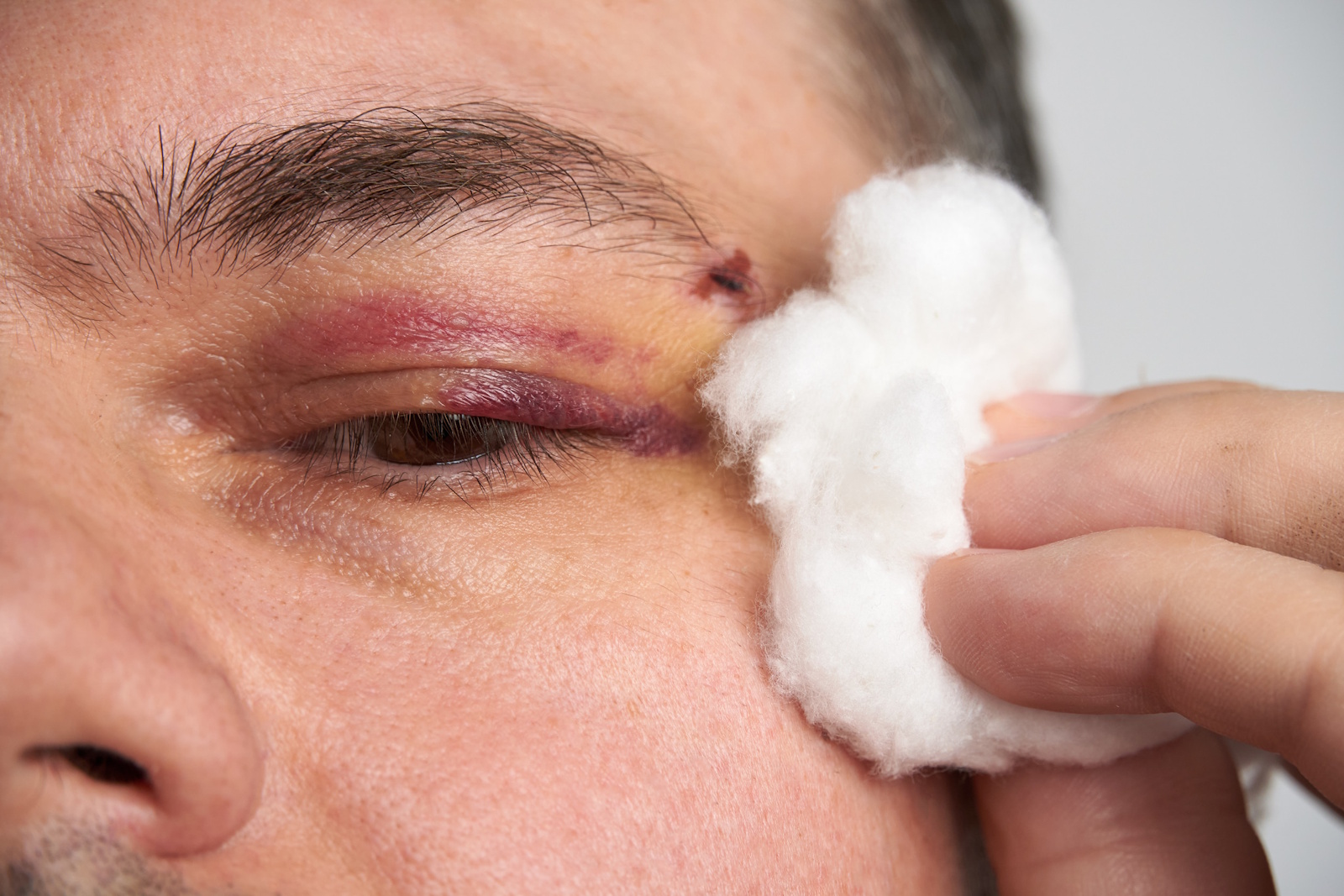
- Photos of any visible injuries or of the cause of your accident.
- Evidence of any medical expenses you’ve incurred because of your vision loss.
Some forms of supporting evidence may be harder to obtain than others. If your claim is taken on, your accident-at-work solicitor can help to try and secure information to help prove your case as part of their service.
How Long Do I Have to Claim Loss of Sight Compensation?
The standard time limit for personal injury claims is normally 3 years. This may start from the date you lost your sight at work, or in some cases, the date you became aware that your vision problem was linked to the accident. The latter is called your ‘date of knowledge’.
However, the deadline may be different in some cases, such as if you were under 18 when you sustained the injury, the time limit normally starts from your 18th birthday.
Sight loss can have a massive psychological impact on the injured party. For some people, it could result in a lack of mental capacity and, as such, they may not be able to handle a sight loss compensation claim themselves.
If a loved one is unable to claim, you might be entitled to act as their litigation friend and seek justice on their behalf.
A solicitor can help you to apply to be a litigation friend and, if approved, you’ll liaise with them to manage the claim on your loved one’s behalf.
Start the process of claiming compensation for loss of vision with our complimentary free consultation.
With 30+ years of experience, our solicitors are committed to providing a 100% No Win, No Fee brain injury claims service, effectively giving claimants a risk-free way to pursue the compensation they deserve.
Or call us on 0333 241 2519 to speak with a legal advisor.
How Much Compensation for Loss of Sight?
Compensation levels in successful loss of sight at work claims will vary from case to case. Usually, if your case is won, the settlement you’ll be offered will be made up of:
- General damages to cover psychological and physical suffering.
- Special damages for any costs or expenses linked to your sight loss injury.
According to the Judicial College Guidelines (JCG) for general damages, compensation for vision problems can range as follows:
- £2,690 – £10,660 for transient to minor eye injuries.
- £11,120 – £25,600 for minor but permanent impairment of vision.
- £28,090 – £48,040 where there is a serious, but incomplete loss of vision.
- £60,130 – £66,920 for complete loss of sight in one eye.
- £66,920 – £80,210 for the total loss of one eye.
- £78,040 – £219,400 for loss of sight in one eye with reduced vision in the other (depending on severity and risk of deterioration).
- Around £327,940 for total blindness.
Losing your sight following an accident at work can have a massive financial impact on your livelihood. Therefore, you could also receive compensation to cover:
- The supply of aids and devices that will help you cope with your sight loss.
- Modification of the layout of your home to make it easier to navigate.
- Loss of earnings and future loss of income.
- Medical treatment costs.
- Care costs (including full-time nursing or the cost of a loved one helping you).
To get a full understanding of how your sight loss has affected you or will affect you in the future, they will normally arrange for an independent specialist to assess you. The subsequent report will help them to value your claim, as will your hospital or GP records.
Do You Need a Solicitor for Loss of Vision Claims?
Even if you have quite a straightforward claim, your employer’s insurance provider may try to contest how much compensation you are entitled to. As such, it may be wise to take on a solicitor who has experience in loss of vision claims. Their experience and skills should make the claims process much more straightforward.
If you decide to work with a work accident solicitor on our team, some of the services they may provide to make your claim easier include:
- Collection of evidence from your employer and other sources.
- Timely preparation and filing of your claim.
- Handling all aspects of communication so you don’t need to speak to your employer directly about the claim.
- Trying to secure the maximum level of compensation possible to cover your suffering.
- Sending regular updates to you to keep you in the loop about the progress of your case.
It is also worth noting that all of the above work will be carried out on a No Win, No Fee basis if your claim is accepted and you sign a Conditional Fee Agreement (CFA).
How Long Do Work-Related Loss of Sight Claims Take?
The time taken to settle a work-related sight loss claim will vary from case to case and be dependent on several important factors, including:
- The severity of your initial eye injury.
- Your overall prognosis.
- Whether your employer accepts liability for your sight loss.
For instance, if you suffered partial sight loss for a matter of weeks after a head injury at work, you might be compensated in a matter of months, supposing you’d made a full recovery already.
However, it could take well beyond a year to settle a claim relating to work-related blindness after being injured in a chemical spill. This extra time might be required so that medical professionals can fully understand the impact your injuries will have on your life going forward.
To help you financially, interim payments might be awarded in longer-term claims to cover some immediate costs, including care expenses and lost earnings.
Contacting Us About a Loss of Sight Compensation Claim
If you or a family member has suffered sight loss at work and would like to know if you should be compensated, you can:
- Speak to one of our legal advisors by calling 0333 241 2519.
- Connect to our online chat service (normally operated 24 hours a day).
There’s no obligation to take action following your call, and we’ll assess your case for free. However, if you decide to claim after hearing our legal advice and one of our specialist accident-at-work solicitors offers to help, they’ll manage your case on a No Win, No Fee basis.