
 Get free legal advice from a solicitor

Working in construction can be dangerous, and one of the most dangerous types of accidents is when a trench collapses with workers inside. These incidents can result in serious life-changing injuries and, in some cases, fatalities. In this article, we’ll explore when you could claim compensation for a trench collapse accident at work, and the general process of doing so.
Our team is here to help if you or a loved one has been injured in a collapsed trench. During a free initial consultation, a legal advisor can assess what happened, listen to your side of the story, and answer any questions you have. They’ll then set out your chances of being compensated and explain your legal options. If your case looks to be feasible, we could connect you with a No Win, No Fee accident at work solicitor on our panel.
For free advice on trench collapse compensation claims, you can:
- Call our legal advisors on 0333 241 2519.
- Connect with an online advisor via the live chat.
Please read on to find out what types of trench collapse accidents could lead to a compensation claim.
Can I Make a Claim for a Trench Collapse at Work?
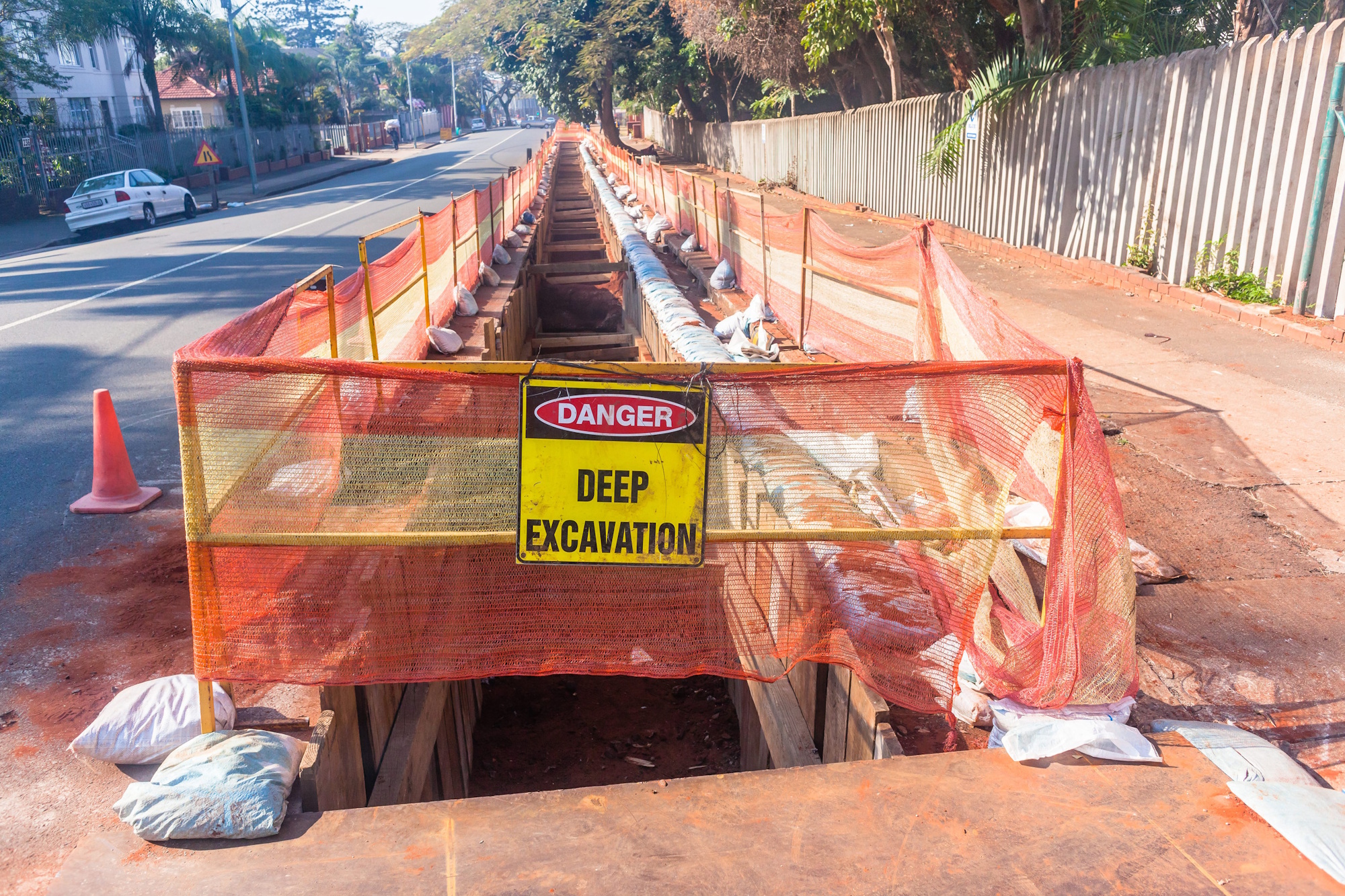
According to the Health and Safety Executive (HSE), excavation work should not start until the excavation has been made safe. Before work begins, contractors should also be given relevant information about ground conditions, underground structures or water courses, and the location of existing services.
To help reduce the risk of trench collapses, site managers should consider:
- What temporary support will be needed to support the excavation?
- Battering the sides of the trench to a safe slope to improve stability.
- Using projecting trench sheets, toeboards or box sides to help stop loose material from falling into the trench.
Workers in trenches should wear head protection, and substantial barriers should be placed around excavations where there is a risk of someone falling in.
As such, if a trench collapse happened because proper safety measures were not in place, you may be entitled to claim compensation. To do so, you would usually need to show that:
The site operator or another responsible party owed you a duty of care.
That duty was breached, and the trench collapse happened because of that failure; and
You suffered injury as a result of the collapse.
We’ll explore what types of evidence you could use to prove all of the above later in this guide.
What Should I Do After a Trench Collapse?
If you have been injured in a trench collapse at work, it is important to do the following as soon as you can:
- Report the collapse to your employer or site manager and make sure it is recorded in the accident book.
- Seek medical treatment for your injuries, whether that means first aid, attending hospital or seeing your GP;
- Make a note of everything you can remember about how the collapse happened while it is still fresh in your mind.
- Cooperate with any investigation carried out by the Health and Safety Executive (HSE), if one takes place.
Depending on your role and the circumstances, you may also be expected to follow your workplace’s accident reporting procedures after the incident.
What Evidence Can Help With Trench Collapse Claims?
All of the following could help support a trench collapse compensation claim:
- An investigation report from the Health and Safety Executive (HSE).
- Video footage (mobile phone, CCTV, dash-cam) of the accident.
- Medical records to help confirm your level of suffering.
- Witness statements from other workers who saw the collapse.
- Photographs of the trench that identify any safety concerns.
- A copy of an accident report form about the incident.
You may not be able to obtain some of this evidence yourself. Don’t worry if that is the case, because if your claim proceeds, your solicitor can send evidence requests on your behalf.
What’s the Time Limit for Trench Collapse Claims?
If you were injured in a trench collapse accident, you will usually have 3 years to start your claim. In most cases, it runs from the date of the accident, although in some circumstances it may run from a later date of knowledge.
In some circumstances, though, the limitation period may run differently. For instance, if you are claiming following the death of a loved one in a trench collapse accident, the time limit will also usually be 3 years. Depending on the type of claim being made, this may run from the date of death or from the date of knowledge of the person bringing or benefiting from the claim.
If you’d like us to check how long you have to start a claim, please get in touch for a free assessment of your case.
What Compensation Can I Claim for a Trench Collapse Injury?
Compensation for a trench collapse injury will typically be made up of:
- General damages – for the pain, suffering and loss of amenity caused by your injuries.
- Special damages – for the financial losses and expenses you have incurred because of the trench collapse accident.
Your solicitor will build a picture of how much suffering you’ve endured by collecting medical notes and independent reports about your injuries. They might then compare your injuries to those listed in the Judicial College Guidelines (JCG).
The special damages element of any settlement made could cover:
- The cost of adapting your home so that you will find it easier to cope with any ongoing disabilities.
- Care and support costs, for instance, full-time nursing or support from friends and family.
- Medical expenses and rehabilitation costs.
- Loss of earnings.
- Travel expenses.
- Any future reduction in earnings.
If you decide to proceed with a claim and you are represented by an accident-at-work solicitor on our team, they’ll review any settlement offer with you before accepting it.
Take the first step towards claiming compensation for a trench collapse at work with our complimentary free consultation.
With 30+ years of experience, our solicitors are committed to providing a 100% No Win, No Fee claims service, offering claimants a risk-free path to pursue the compensation they deserve.
Or call us on 0333 241 2519 to speak with a specialist solicitor.
Can I Claim for a Loved One on Their Behalf?
Sometimes, a person injured in a trench collapse may be unable to manage a compensation claim themselves. In these circumstances, it may be possible for a suitable adult to act on their behalf as a litigation friend.
This is usually necessary where the injured person lacks the mental capacity to conduct their own claim. Anyone under 18 will also usually need a litigation friend. If approved, the litigation friend can make decisions about the case and deal with the claim in the injured person’s best interests.
What If a Loved One Died in a Trench Collapse at Work?
Sadly, trench collapses can be fatal. While compensation cannot undo what has happened, it may be possible to bring a claim on behalf of the deceased’s estate or as a dependant.
Depending on the circumstances, compensation may be available for:
- The pain and suffering the deceased experienced before they passed away.
- Funeral expenses paid by dependants.
- Financial dependency or the loss of services previously provided by the deceased.
We provide a no-obligation consultation for fatal injury claims, so please contact a legal advisor if you would like to discuss your options.
Can Self-Employed Workers Claim for Trench Collapse Injuries?
Self-employed workers and subcontractors may be able to claim compensation for injuries caused by a trench collapse, just like employees can, if the accident was caused by someone else’s negligence.
On construction sites, those in control of the work still have legal duties to plan, manage and monitor health and safety properly. That can include protecting self-employed workers, subcontractors and other people working on site.
To see if a solicitor could help you start a claim, please contact our legal advisors.
Do You Need a Solicitor for Trench Collapse Accident Claims?
As well as understanding lots of legal procedures, accident at work claims can involve some quite complex evidence. Dealing with this type of information alone can make a claim quite challenging. As such, to make the claims process easier, you may prefer to use an accident-at-work solicitor who has experience and understanding of such claims.
Some of the services solicitors on our team provide when handling such claims can include:
- Finding the evidence to prove your case.
- Filing your claim correctly and within the legal time limits.
- Arranging for your trench collapse injuries to be assessed independently.
- Negotiating on your behalf so that you don’t need to speak to your employer about the claim.
- Trying to secure the maximum compensation possible so that all of your suffering is covered.
- Ensuring you’re regularly updated as your claim progresses.
Crucially, our team of accident-at-work solicitors work on a No Win, No Fee basis for any workplace claims they accept.
Will I Be Sacked if I Claim for a Trench Collapse Accident?
You should not be sacked or treated badly just because you raise safety concerns or make a genuine claim after a trench collapse at work.
If your employer dismisses you, demotes you, bullies you or otherwise treats you unfairly because of it, you may be able to take further action.
Contacting Us About a Trench Collapse Accident at Work Claim
If you or a loved one has suffered following a trench collapse accident at work, you can get free advice about your options by:
- Calling our advisors on 0333 241 2519.
- Using our online chat service (open 7 days a week, 24 hours a day).
We will review your claim for free and provide expert legal advice about your chances of being compensated.
If you have a valid trench collapse accident claim and an accident-at-work solicitor from our team agrees to represent you, they’ll work on a No Win, No Fee basis for the entirety of your case.